
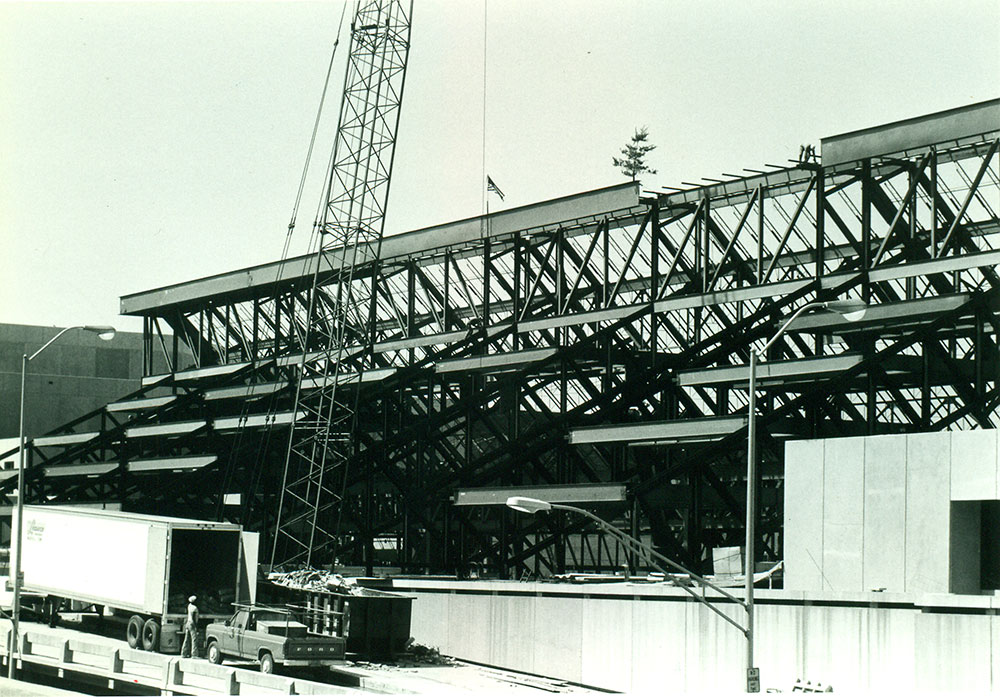
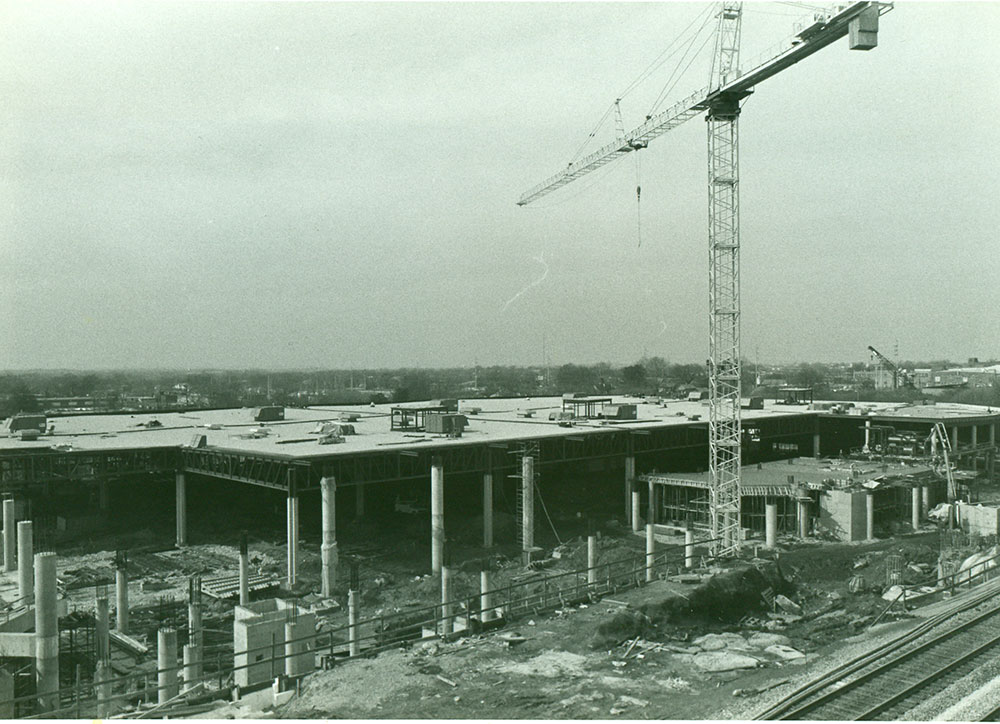
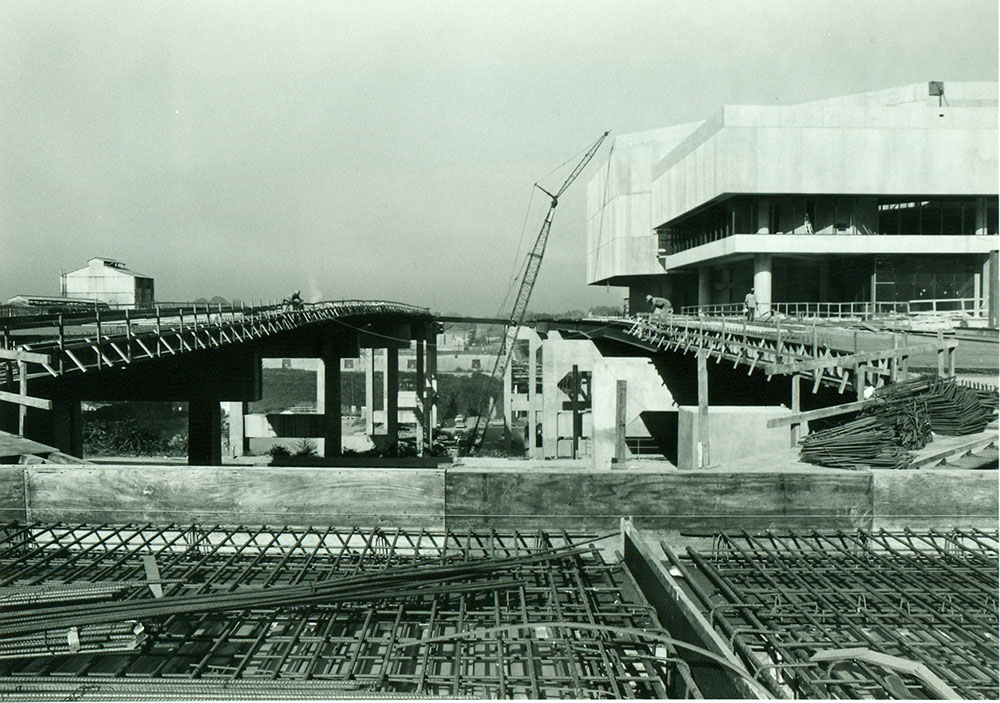
Construction of Building B entrance

It began with a simple idea : Atlanta needed a convention center.
In the late 1960s, the city’s potential was tremendous: it had the world’s busiest airport and a growing reputation as the capital and transportation hub of the Southeast. But one key piece was missing — Atlanta had no large facility capable of hosting the national conventions and tradeshows that were driving tourism and economic development in other major cities.
In 1971, the Georgia General Assembly created the Georgia World Congress Center Authority . The state self-sustaining state agency was charged with planning, constructing, and operating a convention facility that could attract visitors from across the country and around the world.
Selecting a location for the new convention center became one of the Authority’s first major decisions. Early proposals considered sites near Hartsfield-Jackson Airport and near the Atlanta Civic Center.
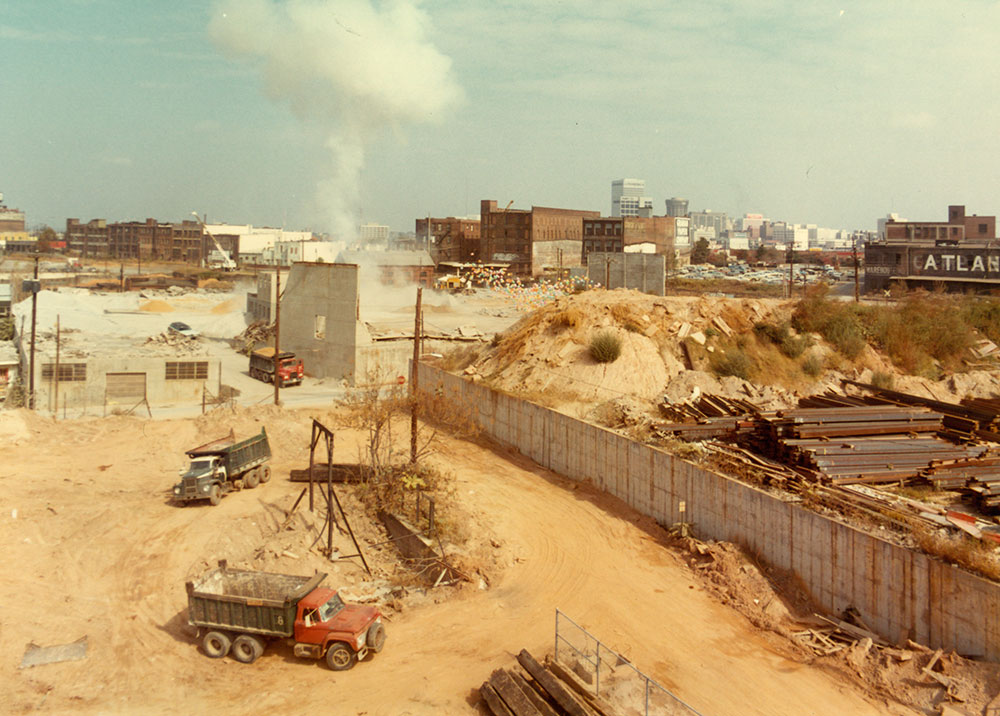
Ultimately, planners chose a site on Atlanta’s west side near downtown and several major interstate highways; at the time, the surrounding area was largely industrial and under developed.
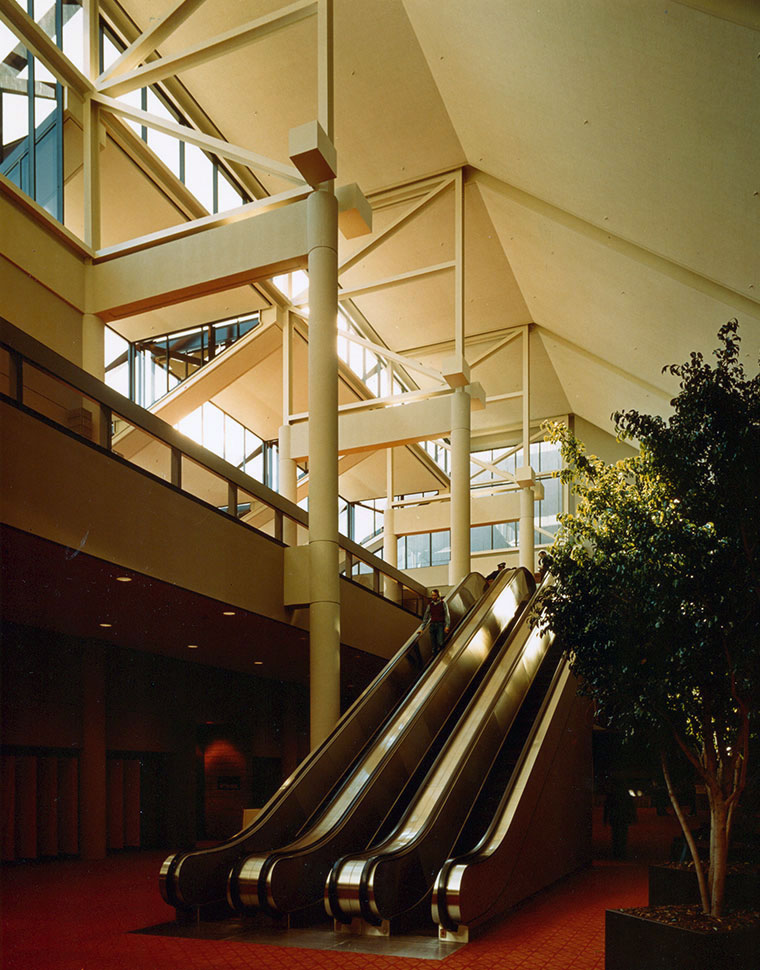
Building B, 1980s
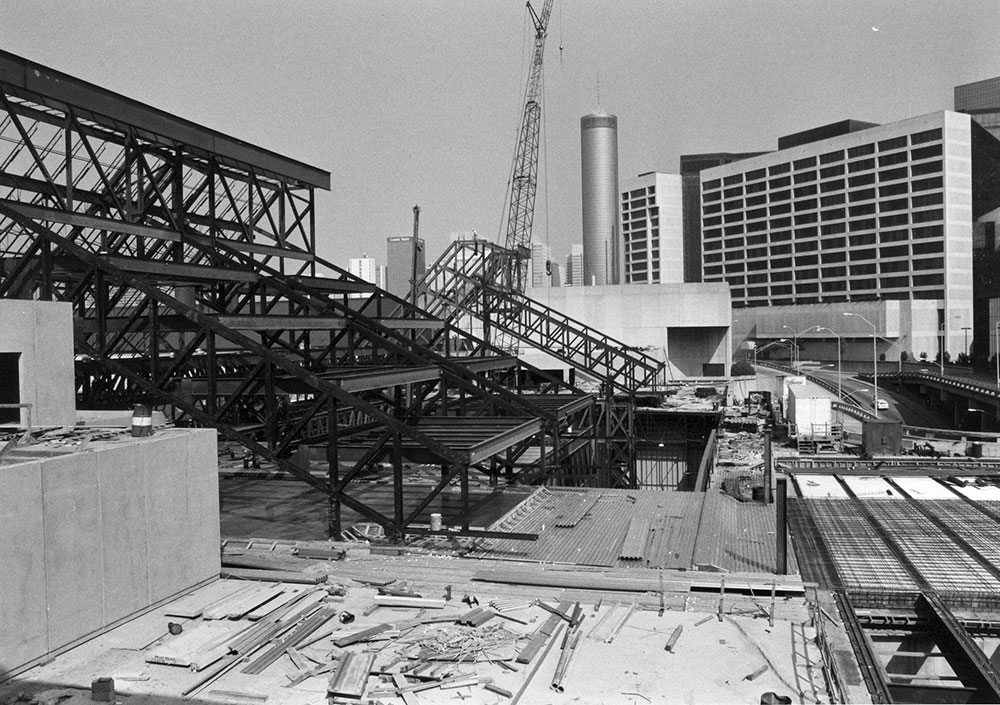



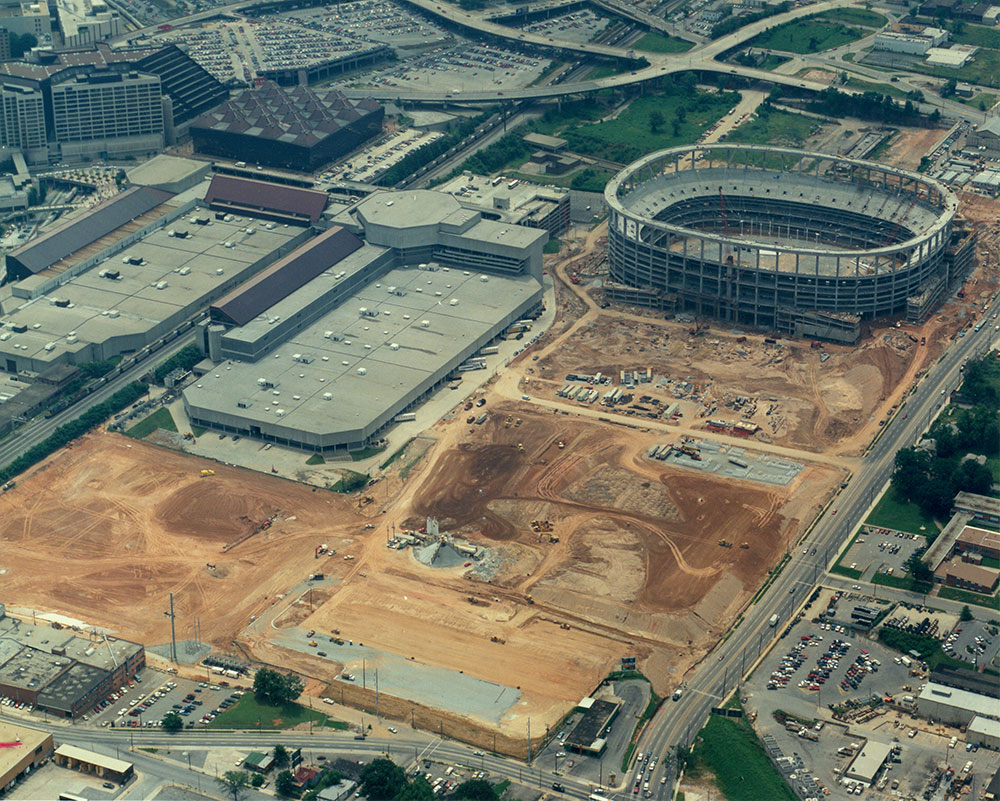
Construction of Georgia World Congress Center began in October 1974.
Less than two years later, the facility officially opened on September 8, 1976.
Its first event, the Bobbin Show — also known as the American Apparel Manufacturers Association Convention — brought thousands of textile industry professionals to Atlanta. Georgia World Congress Center contained approximately 350,000 square feet of exhibit space, already making it one of the largest facilities in the United States at the time.
From the beginning, Georgia World Congress Center attracted major conventions and trade shows thathad previously bypassed the Southeast. These events filled hotels, restaurants, and businesses throughout the region, demonstrating the economic impact the convention industry could bring to Georgia.
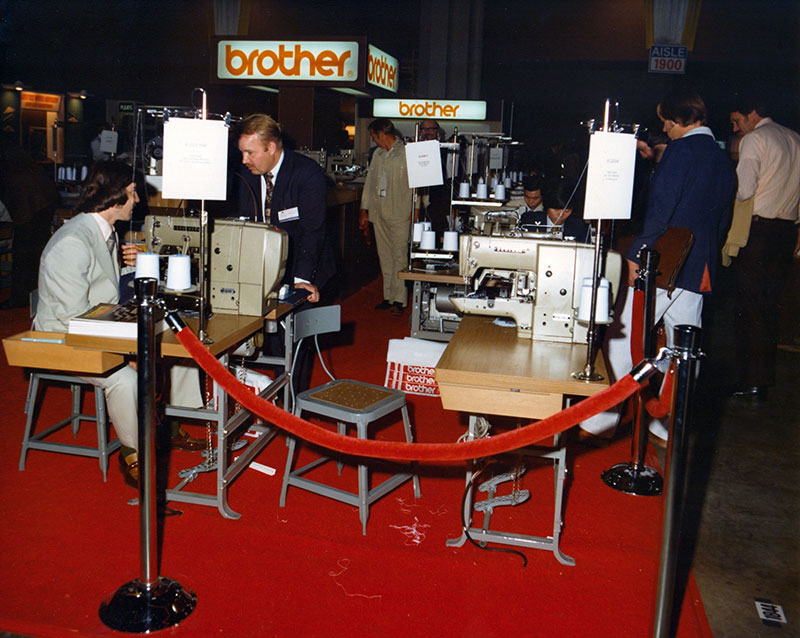
The Bobbin Show, 1976
As the convention industry grew, so did GWCC. Throughout the 1980s, the facility underwent several expansions that increased exhibit space and added meeting rooms and support facilities.
Each expansion allowed Atlanta to compete for larger conventions and industry exhibitions. By the end of the decade, Georgia World Congress Center had established itself as one of the nation’s leading convention venues, welcoming millions of visitors each year.
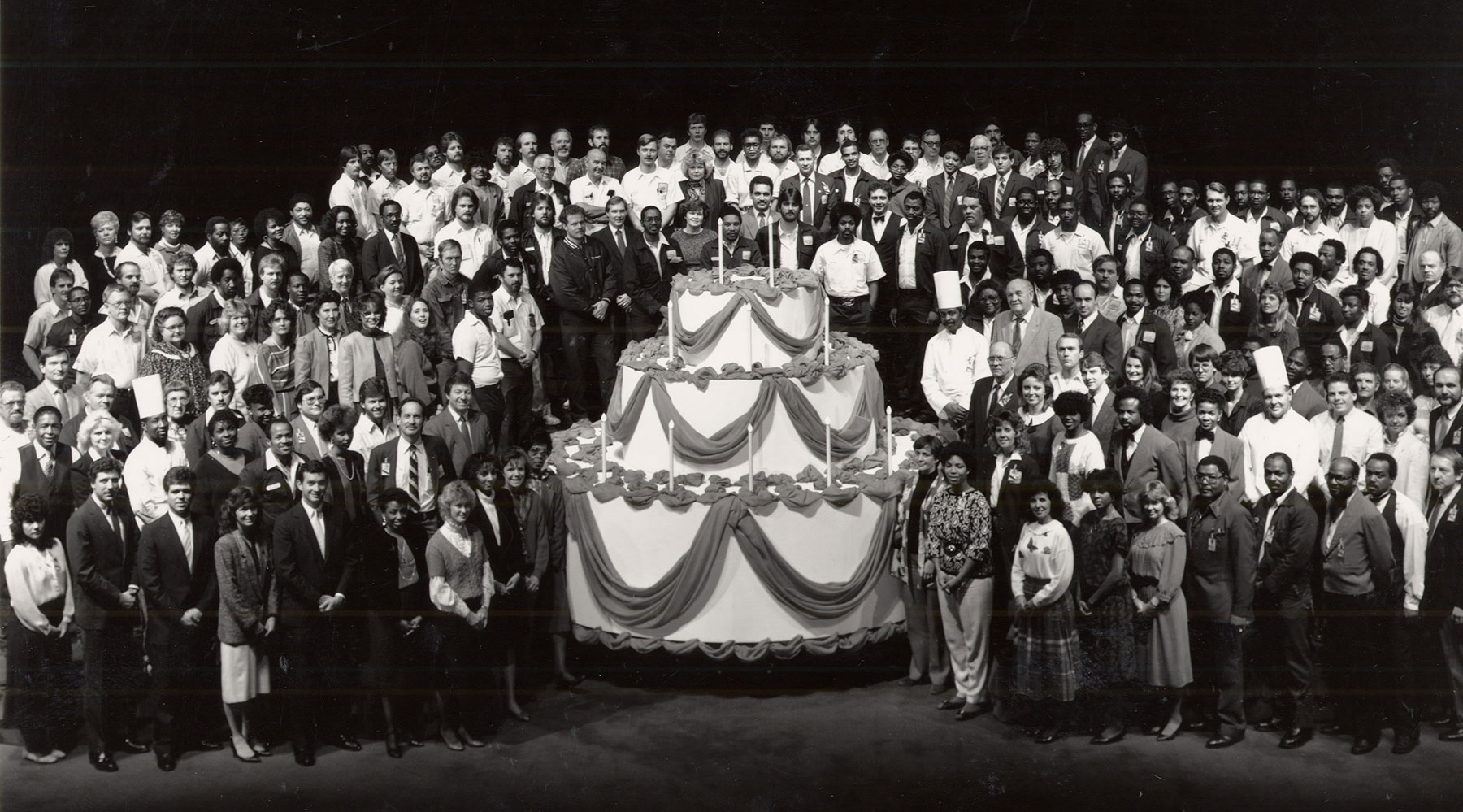
GWCC 10th Birthday Celebration
With the 1990s came a decade of change to Georgia World Congress Center Authority’s campus and its role in the city.
In 1992, the Georgia Dome opened just steps away from the Congress Center. At the time, it was one of the largest domed stadiums in the world and soon became home to the Atlanta Falcons. The addition expanded the campus’ ability to host large conventions, sporting events, and concerts.
Atlanta’s selection in 1990 to host the 1996 Centennial Olympic Games placed Georgia World Congress Center at the center of the city’s Olympic preparations. The Georgia Dome hosted gymnastics and basketball competitions, while GWCC served as the International Broadcast Center for global media coverage and also hosted several Olympic events.
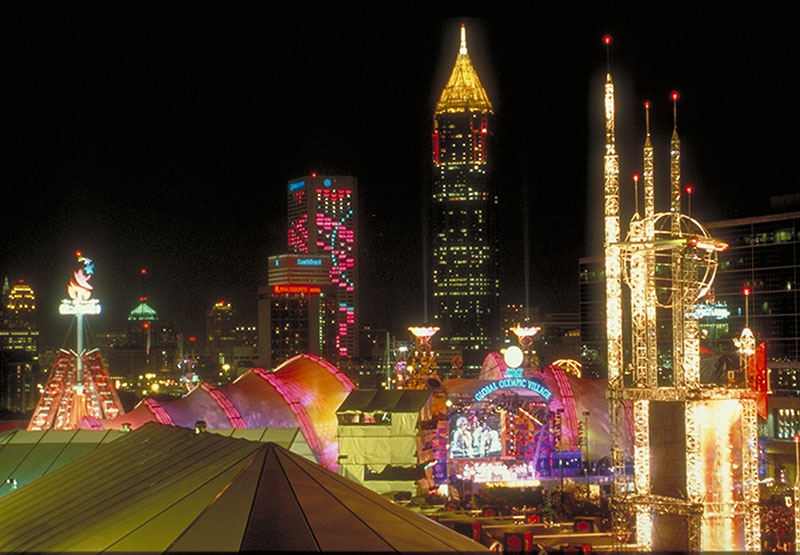
Downtown Atlanta During 1996 Olympic Games
The Olympic Games also led to the development of Centennial Olympic Park , a 21-acre public park connecting Georgia World Congress Center with downtown Atlanta. Planning for the park began in 1994 under the leadership of Dan Graveline, Executive Director of Georgia World Congress Center Authority from 1976 to 2009. Working with Governor Zell Miller, civic leaders, and private partners, Graveline helped coordinate the project on a compressed timeline.
The Park opened during the Olympic Games and was later completed as a permanent publicspace. When it officially reopened on March 28, 1998, an estimated 150,000 to 200,000 visitors attended the dedication weekend.
Additionally, Georgia International Plaza, a six-acre green space built above a parking structure (Red Deck), helped connect the Congress Center to the stadium district and downtown Atlanta.
By the end of the decade, Georgia World Congress Center Authority had grown from a single convention facility into a campus that included Georgia World Congress Center, the Georgia Dome, and Centennial Olympic Park.
The next major milestone came in 2002 with the completion of Building C, the fourth major expansion of Georgia World Congress Center. The addition significantly increased exhibit space and meeting facilities, helping position Georgia World Congress Center among the largest convention centers in the United States.
In 2024, the campus added a new convention headquarters hotel with the opening of Signia by Hilton Atlanta, a 976-room property connected directly to GWCC’s Building C.
At the same time, major development projects are transforming the surrounding area. Centennial Yards is reshaping the historic rail corridor south of the campus, while the development of the former CNN Center — now known as The Center (CTR) — and the construction of a new Live Nation entertainment venue scheduled to open in 2027 are bringing new activity to downtown Atlanta.
Today, Georgia World Congress Center Authority manages one of the largest convention and entertainment campuses in the United States.
Its facilities welcome millions of visitors each year and continue to play a major role in Atlanta’s economy, and nearly fifty years after its opening, Georgia World Congress Center remains exactly what its founders envisioned — a place where the world comes to Atlanta.